USS Nimitz CVN-68 Military Skin Faceplate
Carry the Flagship
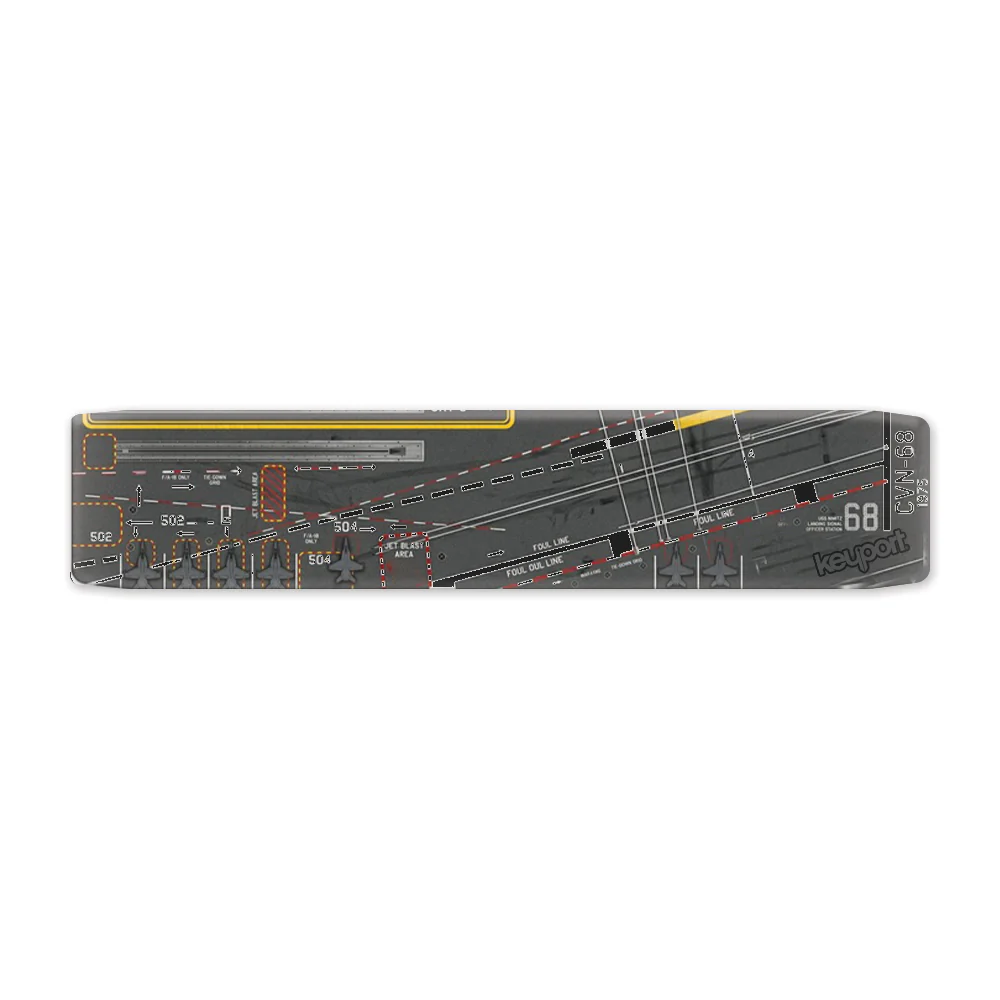
The flight deck of an aircraft carrier is one of the most dangerous workplaces on earth. Every line painted on it serves a life-or-death function. The yellow caution striping marks catapult tracks that launch 50,000-pound aircraft from zero to 170 mph in two seconds. The white foul line separates the landing area from the rest of the deck: cross it during recovery operations and you're in the path of an aircraft catching the wire at 150 mph. The red hash marks designate jet blast danger zones. The numbered spots tell aircraft handlers exactly where to park, chain, and fuel every jet on the ship.
USS Nimitz, CVN-68, has carried these markings for five decades. Commissioned in 1975, she is the oldest active nuclear-powered aircraft carrier in the U.S. Navy. She launched the helicopters for Operation Eagle Claw, the 1980 attempt to rescue the American hostages in Iran. She deployed during both Gulf Wars and across every ocean for fifty years of continuous operations. Thousands of aircraft have launched and recovered from her deck. Her final decommissioning, currently planned for 2027, will close out the longest service life of any U.S. supercarrier.
This faceplate shows a top-down section of her flight deck: the angled deck centerline, catapult tracks, arresting wires (the third wire is the target, and every Navy pilot knows that), foul line, parking spots, and the faint silhouettes of F/A-18s on the deck. The "1975-" service mark reads as it should: she's still writing her own history.
If you served on a carrier, you'll recognize every marking. If you didn't, now you know what they mean.
Part of the Military Skins series. Each faceplate simulates the exterior surface of an iconic military vehicle, reduced to fit your Keyport.
About the USS Nimitz
The USS Nimitz, CVN-68, is the lead ship of the Nimitz-class supercarriers, the most successful class of aircraft carriers ever built. Named for Fleet Admiral Chester W. Nimitz, the commander of the U.S. Pacific Fleet during World War II, she was commissioned on May 3, 1975 at a length of 1,092 feet, a displacement of more than 100,000 tons, and a crew complement of roughly 5,000 sailors and air wing personnel. She is powered by two A4W nuclear reactors that give her effectively unlimited range and the ability to operate at sea for 20-plus years between refuelings.
Across five decades, Nimitz has been the U.S. Navy's most visible instrument of force projection. She operated in the eastern Mediterranean during the late Cold War. She launched the helicopter assault force for Operation Eagle Claw, the failed 1980 mission to rescue the 52 Americans held hostage in Tehran. She deployed during Operations Desert Shield and Desert Storm in 1991, again during Operation Iraqi Freedom in 2003, and repeatedly to the Persian Gulf and Indo-Pacific in the decades since. She holds the record for one of the longest sustained warship deployments in modern history: a 340-day continuous deployment from April 2020 to February 2021 during the COVID-19 pandemic.
Built for a 50-year service life, Nimitz has been extended past her original retirement date as the U.S. Navy works to maintain its legally mandated fleet of 11 supercarriers. Her successors — the Gerald R. Ford class — are still entering service. When she is finally decommissioned, the inactivation and recycling process will take more than a decade. The ship that launched a generation of aviators will outlast most of the men and women who served on her.
What is a Faceplate Scale?
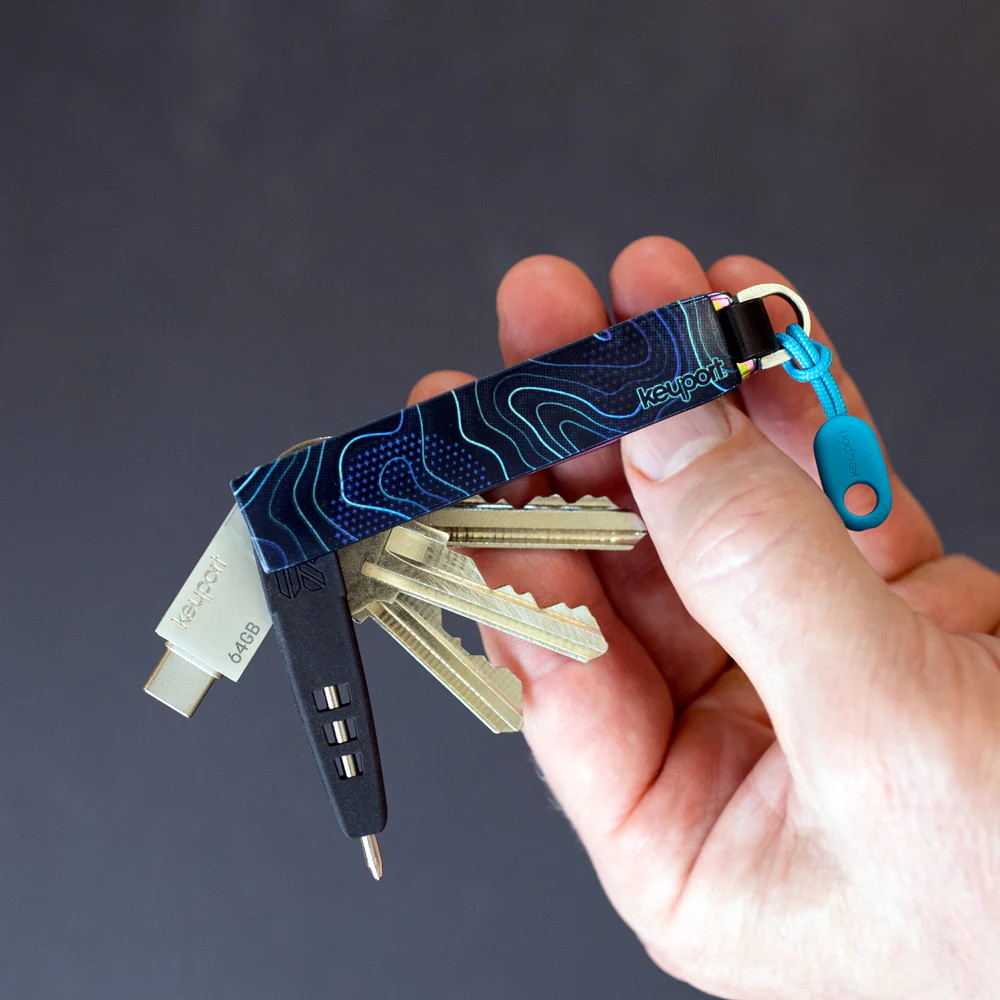
Keyport Faceplate Scales are removable side plates that allow you to customize your Keyport Pivot, Keyport Slide, or Anywhere Tools Bundles by Keyport. Similar to knife scales, Faceplate Scales add both function and personalization to Keyport's modular key organizers, key holders, and keychain multi-tools.
Why Choose a Faceplate Scale?
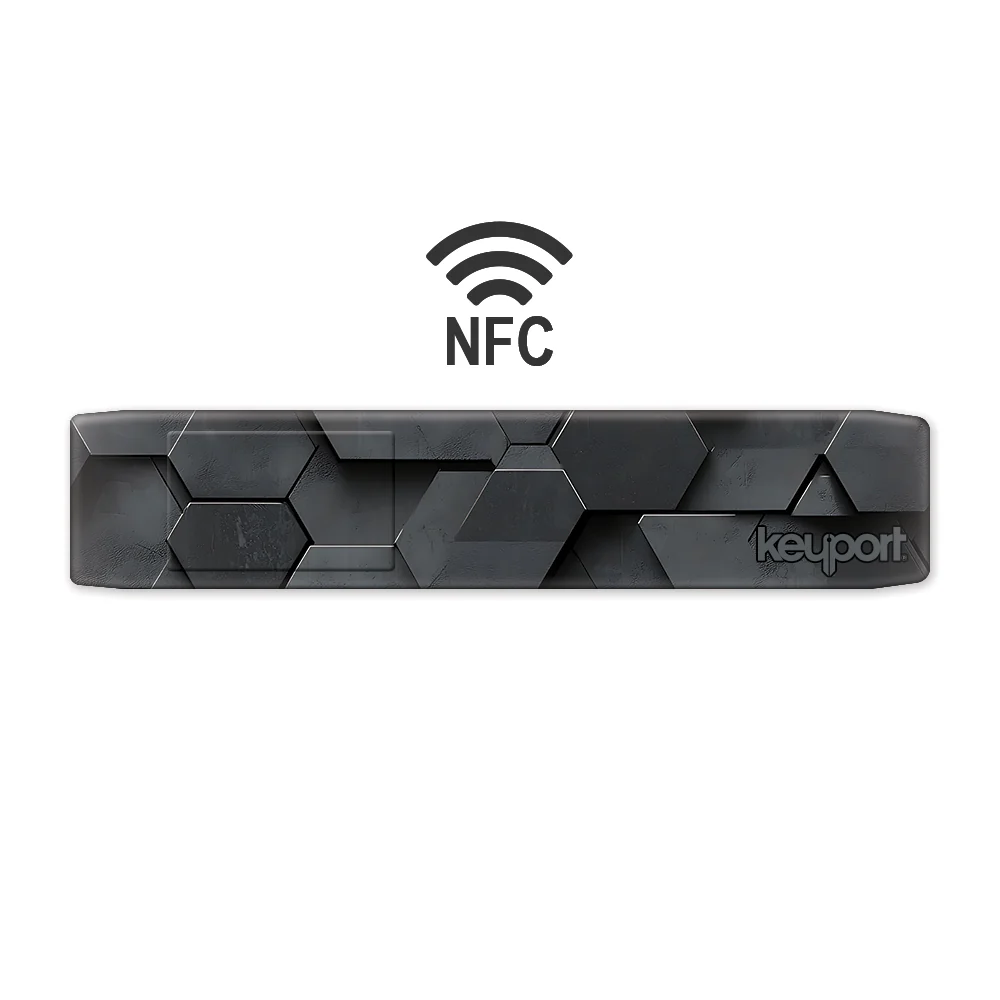

The USS Nimitz CVN-68 Faceplate Scale features a durable stainless spring steel plate staked to a polycarbonate outer shell. The graphics are hardened on the outside of the PC shell with a special ink that is baked on with ultraviolet light and highly resistant to wear and tear. The UV-hardened ink preserves the authentic deck markings, weathering, and operational detail of the original carrier surface, even with daily carry. The fastener-free design makes snapping on a new Faceplate a literal snap, and removing them is very easy with the help of a paper clip, pen tip, or Module Removal Tool (MRT). So, you can switch them up whenever you like.
Note: Each Faceplate Scale is individually sold.
Key Features
- Precision Fit - Designed to seamlessly attach to the Keyport Pivot, Anywhere Pocket Clip (as a money clip), NEBA Module, MOCA2 Module, Keyport Slide 3.0, or the Keyport Slide 4.0.
- Ergonomic & Lightweight – Adds style without bulk, maintaining a sleek, compact profile.
- No-Fastener Attachment – Securely clicks on/off with no screws or extra hardware.
- Built to Last – Features stainless steel backing and UV-hardened graphics for maximum durability.
- Multi-Use Functionality – Works as a money clip when paired with the Anywhere Pocket Clip.
Specifications
- Materials: Stainless Steel & Polycarbonate
- Graphics: UV Hardened Ink
- Dimensions: L: 2.865" H: 0.596" T: 0.105"
- Weight: 0.18 oz.
Frequently Asked Questions
What is a Faceplate Scale?
Keyport Faceplate Scales are removable side plates for customizing your Keyport Pivot, Slide, and Anywhere Tools. They work like knife scales, offering both function and flair.
Are Faceplate Scales compatible with all Keyport products?
Faceplates are compatible with the Keyport Pivot, Slide 3.0, Slide 4.0, NEBA Module, MOCA2 Module, and the Anywhere Pocket Clip (where it functions as a money clip).
How do I remove or replace a Faceplate Scale?
A small tool is required to remove a Faceplate, either a paperclip, pen tip, or our recommended Keyport Module Removal Tool (MRT). To remove, simply depress the center dimple, slide the Faceplate backward, and lift it off.
The MRT is especially helpful for both Pivot setup and quick removal of modules or Faceplates.
▶️ Watch How-To Video at 1:25
Are Faceplates durable?
Absolutely. Each Faceplate Scale features a stainless steel backing and UV-hardened ink for long-lasting, scratch-resistant performance.
Can I buy more than one to change them up?
Yes. Our modular design means you can collect and swap Faceplates anytime to match your style, mood, or mission.
Description
Carry the Flagship
The flight deck of an aircraft carrier is one of the most dangerous workplaces on earth. Every line painted on it serves a life-or-death function. The yellow caution striping marks catapult tracks that launch 50,000-pound aircraft from zero to 170 mph in two seconds. The white foul line separates the landing area from the rest of the deck: cross it during recovery operations and you're in the path of an aircraft catching the wire at 150 mph. The red hash marks designate jet blast danger zones. The numbered spots tell aircraft handlers exactly where to park, chain, and fuel every jet on the ship.
USS Nimitz, CVN-68, has carried these markings for five decades. Commissioned in 1975, she is the oldest active nuclear-powered aircraft carrier in the U.S. Navy. She launched the helicopters for Operation Eagle Claw, the 1980 attempt to rescue the American hostages in Iran. She deployed during both Gulf Wars and across every ocean for fifty years of continuous operations. Thousands of aircraft have launched and recovered from her deck. Her final decommissioning, currently planned for 2027, will close out the longest service life of any U.S. supercarrier.
This faceplate shows a top-down section of her flight deck: the angled deck centerline, catapult tracks, arresting wires (the third wire is the target, and every Navy pilot knows that), foul line, parking spots, and the faint silhouettes of F/A-18s on the deck. The "1975-" service mark reads as it should: she's still writing her own history.
If you served on a carrier, you'll recognize every marking. If you didn't, now you know what they mean.
Part of the Military Skins series. Each faceplate simulates the exterior surface of an iconic military vehicle, reduced to fit your Keyport.
About the USS Nimitz
The USS Nimitz, CVN-68, is the lead ship of the Nimitz-class supercarriers, the most successful class of aircraft carriers ever built. Named for Fleet Admiral Chester W. Nimitz, the commander of the U.S. Pacific Fleet during World War II, she was commissioned on May 3, 1975 at a length of 1,092 feet, a displacement of more than 100,000 tons, and a crew complement of roughly 5,000 sailors and air wing personnel. She is powered by two A4W nuclear reactors that give her effectively unlimited range and the ability to operate at sea for 20-plus years between refuelings.
Across five decades, Nimitz has been the U.S. Navy's most visible instrument of force projection. She operated in the eastern Mediterranean during the late Cold War. She launched the helicopter assault force for Operation Eagle Claw, the failed 1980 mission to rescue the 52 Americans held hostage in Tehran. She deployed during Operations Desert Shield and Desert Storm in 1991, again during Operation Iraqi Freedom in 2003, and repeatedly to the Persian Gulf and Indo-Pacific in the decades since. She holds the record for one of the longest sustained warship deployments in modern history: a 340-day continuous deployment from April 2020 to February 2021 during the COVID-19 pandemic.
Built for a 50-year service life, Nimitz has been extended past her original retirement date as the U.S. Navy works to maintain its legally mandated fleet of 11 supercarriers. Her successors — the Gerald R. Ford class — are still entering service. When she is finally decommissioned, the inactivation and recycling process will take more than a decade. The ship that launched a generation of aviators will outlast most of the men and women who served on her.
What is a Faceplate Scale?
Keyport Faceplate Scales are removable side plates that allow you to customize your Keyport Pivot, Keyport Slide, or Anywhere Tools Bundles by Keyport. Similar to knife scales, Faceplate Scales add both function and personalization to Keyport's modular key organizers, key holders, and keychain multi-tools.
Why Choose a Faceplate Scale?
The USS Nimitz CVN-68 Faceplate Scale features a durable stainless spring steel plate staked to a polycarbonate outer shell. The graphics are hardened on the outside of the PC shell with a special ink that is baked on with ultraviolet light and highly resistant to wear and tear. The UV-hardened ink preserves the authentic deck markings, weathering, and operational detail of the original carrier surface, even with daily carry. The fastener-free design makes snapping on a new Faceplate a literal snap, and removing them is very easy with the help of a paper clip, pen tip, or Module Removal Tool (MRT). So, you can switch them up whenever you like.
Note: Each Faceplate Scale is individually sold.
Key Features
- Precision Fit - Designed to seamlessly attach to the Keyport Pivot, Anywhere Pocket Clip (as a money clip), NEBA Module, MOCA2 Module, Keyport Slide 3.0, or the Keyport Slide 4.0.
- Ergonomic & Lightweight – Adds style without bulk, maintaining a sleek, compact profile.
- No-Fastener Attachment – Securely clicks on/off with no screws or extra hardware.
- Built to Last – Features stainless steel backing and UV-hardened graphics for maximum durability.
- Multi-Use Functionality – Works as a money clip when paired with the Anywhere Pocket Clip.
Specifications
- Materials: Stainless Steel & Polycarbonate
- Graphics: UV Hardened Ink
- Dimensions: L: 2.865" H: 0.596" T: 0.105"
- Weight: 0.18 oz.
Frequently Asked Questions
What is a Faceplate Scale?
Keyport Faceplate Scales are removable side plates for customizing your Keyport Pivot, Slide, and Anywhere Tools. They work like knife scales, offering both function and flair.
Are Faceplate Scales compatible with all Keyport products?
Faceplates are compatible with the Keyport Pivot, Slide 3.0, Slide 4.0, NEBA Module, MOCA2 Module, and the Anywhere Pocket Clip (where it functions as a money clip).
How do I remove or replace a Faceplate Scale?
A small tool is required to remove a Faceplate, either a paperclip, pen tip, or our recommended Keyport Module Removal Tool (MRT). To remove, simply depress the center dimple, slide the Faceplate backward, and lift it off.
The MRT is especially helpful for both Pivot setup and quick removal of modules or Faceplates.
▶️ Watch How-To Video at 1:25
Are Faceplates durable?
Absolutely. Each Faceplate Scale features a stainless steel backing and UV-hardened ink for long-lasting, scratch-resistant performance.
Can I buy more than one to change them up?
Yes. Our modular design means you can collect and swap Faceplates anytime to match your style, mood, or mission.